
Know More
About Azah


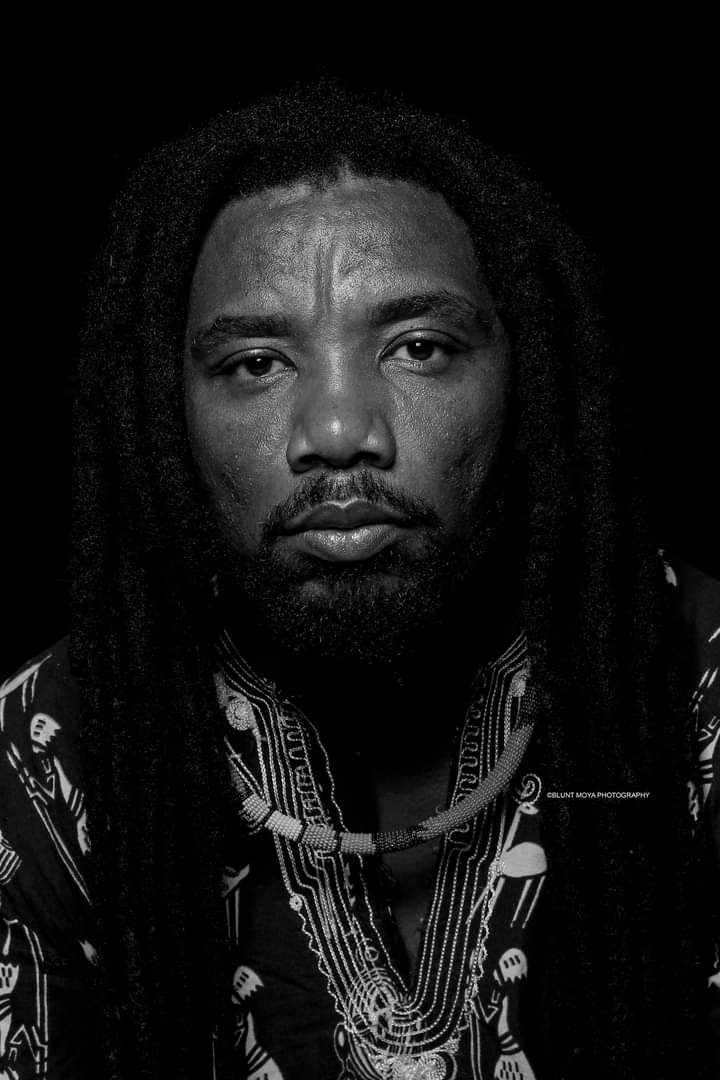
Azah Mphago - Artistic Biography
Multi-instrumentalist, Pan-Africanist, Composer, Sonic Healer, Cultural Entrepreneur, Griot, Indigenous Knowledge System Practitioner
Born in the jazz-drenched township of Mamelodi under the shadow of apartheid, Azah Mphago is a sound sculptor, philosopher, and Pan-African cultural worker whose creative life flows like the Moretele River that shaped him. Rooted in royal lineage and raised in a deeply spiritual home, Azah’s artistry was baptized in ritual, rebellion, and rhythm. As a child, he crafted makeshift instruments with his friend Thabang Tabane, the son of the legendary Dr. Philip Tabane, using oil cans, plastics, and vegetables to turn survival into sound.
His award-winning music bridges common histories, cultural struggles, and spiritual traditions. A spiritual drummer and messenger, Azah’s musicality carries ancestral memory and metaphysical purpose. His early life was immersed in the presence of sangomas, diviners, and seekers who frequented his family home. Though this spiritual sensitivity often isolated him from his peers, music became his sanctuary.
Mentored by scholar and activist Slo Ramokhoase, his mind was sharpened by Black Consciousness and Pan-Africanist philosophy. His classroom was the Moretele River; his stage was the streets of Mamelodi. Humor, poetry, and resistance were his instruments long before he entered formal education.
As a proud member of the last generation of Dr. Philip Tabane’s legendary Malombo band, Azah safeguards one of South Africa’s most influential musical legacies. Tabane, who collaborated with global icons such as Miles Davis and Peter Gabriel, pioneered a sound rooted in African spirituality and improvisation. Azah carries Malombo not only as rhythm but also as a spiritual and philosophical movement rooted in African futurity, ritual, and resistance.
Azah’s career spans continents and disciplines. He has performed, studied, and led workshops in Kenya, Ethiopia, Mozambique, Lesotho, Eswatini, Spain, Portugal, Switzerland, Austria, Belgium, Germany, the United States, Canada, and India. Across these journeys, he has sat at the feet of masters in Sufism, griot traditions, and alchemical thought. His music is not simply heard; it is experienced. It becomes an initiation, a prayer, a time-traveling pulse.
His debut album, Batswadi, won the SATMA Award for Best African Jazz Album (2017), followed by major work as a composer for theatre, including the critically acclaimed Khwezi: Say My Name (Naledi Award nomination, 2019). His compositions also feature in Mamelodi – A Timeline of Heroes, a documentary by Lebo Magolego, where his music adds emotional depth and historical nuance. In 2024, he was honored with the PanSALB Multilingualism Award for the effective use of multilingualism in an album or song, further affirming his commitment to cultural preservation and linguistic inclusivity through music.
Azah has also composed scores for projects focused on wildlife conservation, climate justice, and environmental awareness. These include a documentary on saving elephants from captivity, as well as a project addressing the ecological and social impact of the Musina-Makhado Special Economic Zone. His work in this space uses sound as advocacy, helping to amplify the voices of communities and ecosystems under threat.
He was commissioned by WOMAD to collaborate with Australian artist Tiki Taane on the powerful track “Wadday.” More recently, he collaborated with multi-Grammy-nominated Cuban pianist Omar Sosa on a groundbreaking global project fusing Afro-Cuban jazz with Venda folk spiritual traditions. The project also features musical titans such as Christian Scott aTunde Adjuah and the late Manu Dibango, weaving diasporic soundlines across continents and generations.
Azah has also collaborated with the Cantonese Guangdong Orchestra, deepening cross-cultural musical dialogue between African sonic traditions and classical Chinese instrumentation.
During his invitation to Ambedkar University in Delhi, in partnership with Wits University School of the Arts and the Center for Developmental Practice (NCDHR), Azah engaged in a groundbreaking cultural exchange under the guidance of Dr. Mayer Taub and Dr. Manola Gayatri. This initiative included:
- Lectures with MPhil Developmental Practice students exploring ritual performance and healing, focusing on sonic texts, chanting, and embodied movement as tools for catharsis.
- A performance and collaboration with Indian Sufi master musician Saqlin at the Fireflies Ashram in Bangalore, weaving African ancestral drumming with Sufi sonic traditions.
- Creative activations with a master Odissi dance choreographer, enriching the journey with cross-disciplinary dialogue.
- Community work in Delhi, engaging marginalized caste communities in decolonial pedagogy and facilitating musical therapy in village settings.
Azah has worked with major choreographers such as Gregory Maqoma and Mamela Nyamza, contributing as a multi-instrumentalist, composer, performer accompanist, and vocal warm-up facilitator for world-touring productions including Ketima, Beautiful Me, Beautiful Us, Pest Control, and Hatched Ensemble. These works have been presented across the Americas, Europe, Asia, and Africa.
He intertwines sonic ritual and decolonial heritage across leading cultural and educational institutions, advancing the legacy of ancestral knowledge traditions in contemporary spaces. As an Indigenous Knowledge Systems practitioner, his work reactivates the sacred through sound, story, and performance.
Azah has led indigenous music performances at Freedom Park, facilitated children’s workshops, and hosted cross-cultural residencies in Eswatini and across Indian provinces. These initiatives, proudly supported by Concerts SA, highlight his commitment to sonic diplomacy and Pan-African knowledge exchange.
As a cultural curator, speaker, and decolonial thought leader, he collaborates with institutions such as Ditsong Cultural Museum, Javett Art Centre, Zeitz MOCAA, and the IQOQO Lecture Series. Through these platforms, he engages in critical public discourse on repatriation, indigenous archives, and African spiritualities. He has shared stages with healers, professors, and cultural workers at forums such as Reimagining Heritage, Archives and Museums: Today/Tomorrow, where he speaks to the radical potential of African metaphysics and memory work. He also led a widely regarded anthropological talk on musical archives at Ditsong, offering insight into their collection from a sonic and spiritual lens.
Azah’s work has been cited in numerous academic projects, including Dr. Nduduzo Makhathini’s doctoral research and Dr. Rangoato Hlasane’s film-essay for Sesasedi sa Tsodio. These citations position him as both an artistic and intellectual force within the global Black archive.
Azah Mphago is a vessel of ancestral intelligence, a keeper of rhythm, and a griot of the new world. In his work, music becomes technology; spirituality becomes resistance; sound becomes liberation.
Discography Highlights:
Azah – Batswadi (2017)
Azah – Ngoma dza Mapugubwe (2021)
Thandiswa Mazwai – Ibokwe (2009)
Simphiwe Dana – Kulture Noir (2010)
Philip Nchipi Tabane – Modumo Kgole / Distant Thunder (2016)
Nono Nkoane – True Call (2015)
Indwe – Indwe (2017)
Badzimu – Omar Sosa & Azah (MSS) – Due for release